
What orange wine is (and why it is not a rosé)
Orange wine is made from white grapes in the way a red is made: the juice ferments in contact with the skins, which gives it its amber colour and its tannin. It is not a rosé, which is made from red grapes.
Every time someone picks up a bottle of Fruto de Corni we get the same question: if the grape is white, why is the wine orange? And it is almost always followed by a second one: is it a rosé?
It is not. The difference comes down to something as simple as how long the juice stays with the skins.
The skin decides everything
A conventional white wine is pressed as soon as it is picked, and the juice is separated from the skins almost immediately. That is why it comes out pale: the liquid has barely touched the grape skin.
A red does the opposite. The juice ferments with the skins for days or weeks, and that is where the colour, the tannin and much of the structure come from.
Orange wine is a white that behaves like a red. White grapes, yes, but macerated on their skins. The result is not a fuller-bodied white: it is a different thing altogether. It has tannin, which a white does not usually have, and the amber colour that gives it its name.
A rosé, by comparison, is the reverse: red grapes with very little skin contact. Which is why rosé is pale and orange wine is dark, even though one comes from red grapes and the other from white.
It is not a new fashion
It tends to be presented as the latest trend, but it is the other way round. Macerating white grapes on their skins is how wine was made before modern presses and temperature control existed. In Georgia they have been doing it in buried amphorae for millennia.
What is new is the name. “Orange wine” is a recent commercial label for a very old technique that had simply fallen out of use.
Why Airén
Airén is the most planted variety in La Mancha and has a reputation for being neutral. In a conventional white it gives correct wines and little more.
Macerated on its skins it changes completely. Dried citrus peel appears, along with apricot, a bready background and a minerality nobody associates with Airén. The variety there is too much of here turns out to be the one that stands up best to this treatment.
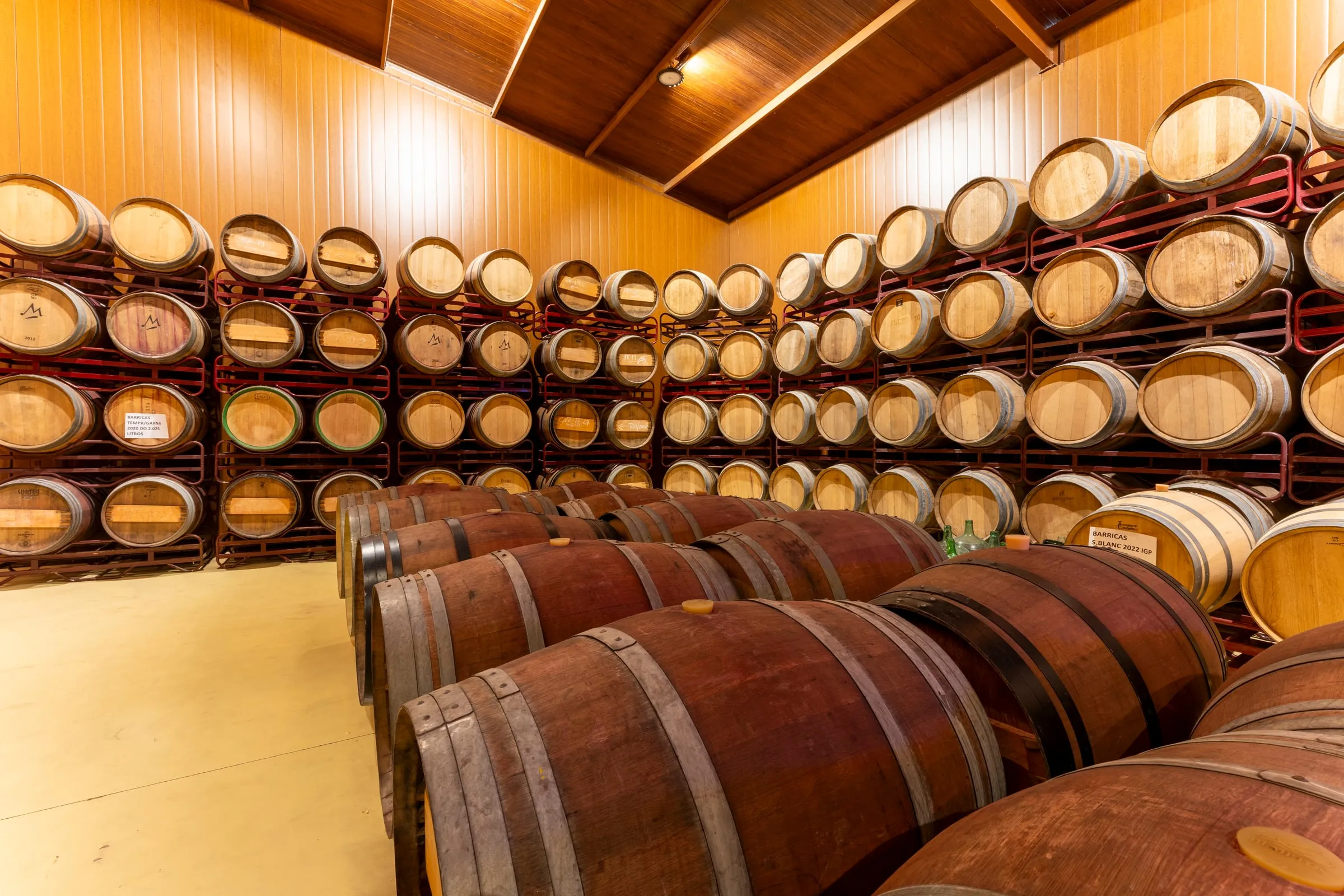
Our Fruto de Corni spends six months between barrel and demijohn, with no added sulphites. There are 500 bottles per vintage, and when they are gone they are gone.
How to drink it
Cold, but not ice cold: between 8 and 10 °C. Too cold and the tannin closes up and the aromas disappear.
And it is worth opening it with food. This is a wine that asks for dishes with character: aged cheeses, spiced cooking, oily fish, fermented vegetables. On its own, as an aperitif, it puzzles people. At the table, it works.
Wines mentioned in this post
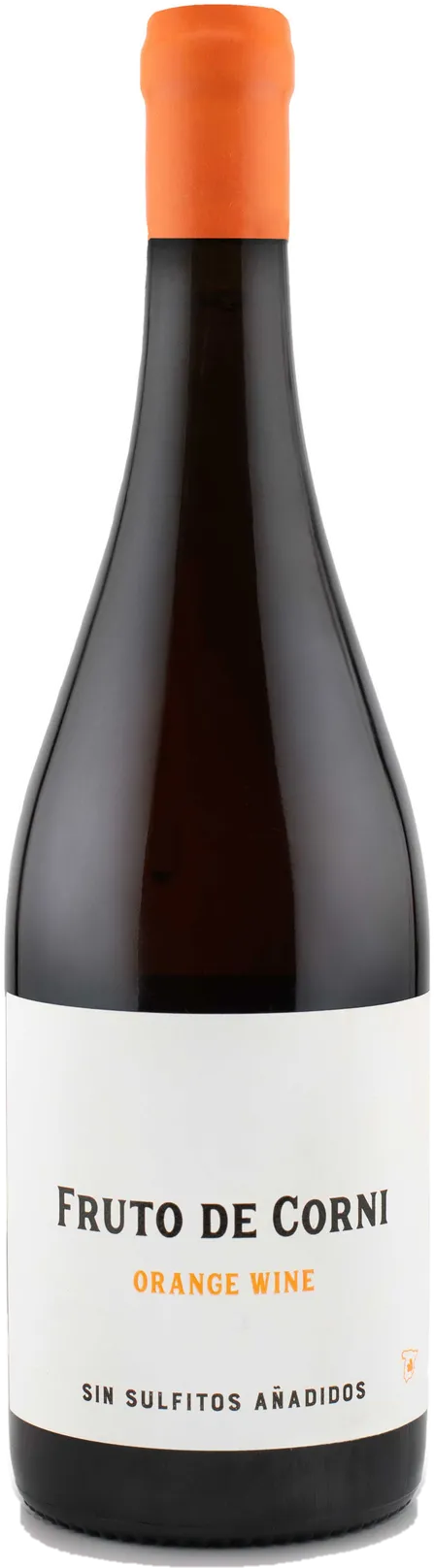
Fruto de Corni
Natural orange wine, no added sulphites. Five hundred bottles and that is it.
Limited edition of 500 bottles